

MEXICO CITY (CN) - On Sept. 19, 1985, as first light began to show, an 8.1 magnitude earthquake shook Mexico City for three interminable minutes.
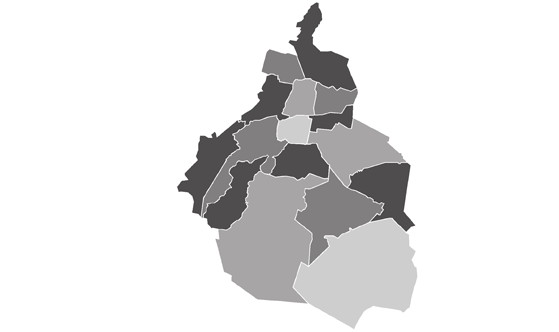
The oldest neighborhoods built on soft lake bed - El Centro, Tlatelolco, Juarez, Doctores, Roma and Condesa - were the hardest hit. The quake killed at least 10,000 people, up to 40,000 according to some estimates, and left many more thousands injured and homeless.
Among the dead was 34-year-old Rodrigo Gonzalez, a Tampico-born, Mexico City-based folk musician known as Rockdrigo who by the time of his death had amassed a cult following in the capital for his surrealist and visceral stories of his adopted city.
He was crushed in his Juarez neighborhood apartment building with his French girlfriend, Francoise Bardinet.
Since 1985, the memory and looming threat of another major quake has haunted Mexico City residents like a ghost.
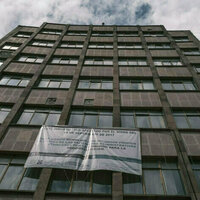
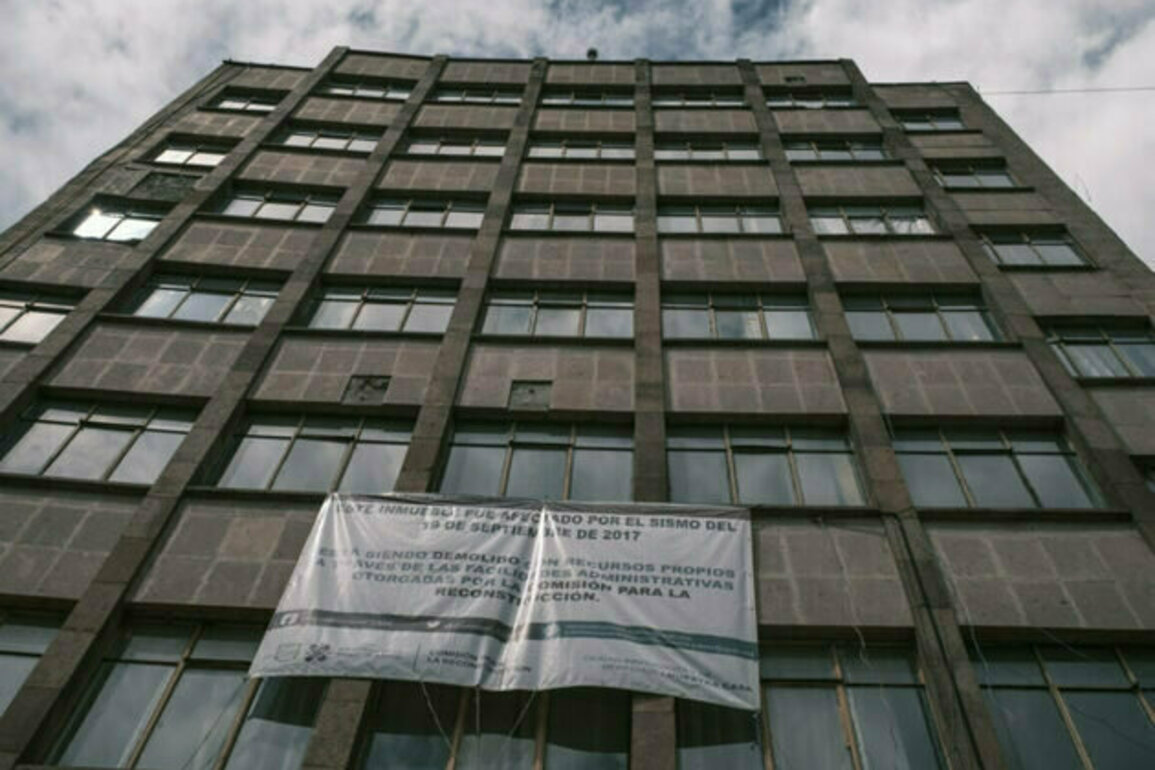
On the exact same date 32 years later - Sept. 19, 2017 - Mexico City experienced a major 7.1 quake that killed close to 200. In 2022, it happened again on the same date less than an hour after the earthquake drill commemorating other two.
"I'll never forget that shaking and the sensation of the ground splitting open," said Leopoldo Villalobos, who was 19 years old at the time of the 1985 earthquake, living in Mexico City's Escandon neighborhood. "Even under the floor of the house felt like it had split, like a crack had opened, but the crack was moving, too. And there was a sound, it vibrated, and it was so awful."
Villalobos went outside of his house and walked by an elementary school that had completely collapsed.
"That was the first thing I saw, and some houses on fire," he said.
"But I realized the children weren't in the school yet. It was a miracle by a matter of minutes. It's a thing that I'll always, always remember. The truth is I was shocked and saddened by what happened, but happy for all the children who were spared," said Villalobos. "It's simply a memory that, of course, comes back to me. The moment passed before they entered their classroom. That's the first thing that comes to mind."
Ral Esquivel, known as Rock y Rul, is the author of "El dia que el barrio murio," or "The day the neighborhood died," a firsthand account of his memories from that day, Sept. 19, 1985, mixed with other accounts from friends and neighbors.
The title of the book is a play on a line from Don McLean's famous song, "American Pie," commemorating the death of rock and roll pioneer Buddy Holly in 1959.
Esquivel, 13 years old at the time of the 1985 quake, grew up in Juarez blocks away from where Rockdrigo lived.
"I was born in a very poor neighborhood in terms of resources. This neighborhood means a lot to me because it's where I became who I am today. Not only humble people, but also thieves ... poverty isn't synonymous with being good people," said Esquivel.
Despite that, the solidarity the neighborhood showed that day left a deep impression on him, especially when three weeks went by and only one ambulance and two police officers show up to help with rescue efforts.
"That was very important to me. As a child, I saw the butcher, the tortilla maker, the people of the neighborhood helping each other. That's why I have so much respect and affection for the neighborhood, for the poor people .... when I saw that we were on our own," said Esquivel.
Around that time, Esquivel was going to small rock shows in downtown Mexico City, when the Mexican "rock urbano" genre was in its infancy. These musicians drew inspiration from Rockdrigo, and would later go on to form iconic Mexican rock bands such as Los Caifanes and El Tri. "Rock urbano" marked a significant shift in contemporary Mexican culture - it was the first time bands were writing songs in colloquial Spanish about their own lived experiences, and claiming the rock genre for themselves.
"I think rock is protest. It's a rhythm that was born from the anarchy and the protest of the suffering of the Black neighborhoods in the United States, perhaps in England, of the working class - and the working class here in Mexico. I've always identified myself with rock music since the earthquake," said Esquivel.
"For me, Rodrigo represents the missing link between the intellectual rocker, the academic rocker from the university who has read books and who has a certain literary pedigree. He is the missing link between the bricklayer - the worker who didn't have the chance to study - he doesn't know about books, he's not that intellectual - and the university student who protests," said Esquivel. "His music unites the two."
"Shot into the sky toward Andromeda," Rockdrigo sings in "La maquina del tiempo," or "The time machine." "I wander through infinity / Sick of war and exploitation / and a circular history of vice and corruption / Lend me your time machine."
Lachlan Summers, a research scholar at The Max Planck Society for the Advancement of Science who studied the Mexico earthquakes for six years, noticed how the date has taken on a deeper metaphorical meaning for Mexico City residents.
"The use of Sept. 19 is a metaphor: the way that it signifies more than just an event in the past, but really the uncanny feeling of the secret or hidden ongoingness of things," said Summers. "This is a date that was kind of condemned, or it doesn't belong to people anymore."
Summers observed how "some people feel particularly attuned to earthquakes or that they notice earthly motion and they inhabit a world that's a little bit more punctuated by deep time or a little bit kind of overflowing with earthly time."
"But a lot of other people, they're not really sure what's happening, but they can't say that the events of the past are actually over. And so they're kind of just in this limbo period before they can declare that the past is actually not going to come back," said Summers.
In 1985, Mexico was getting ready for the 1986 World Cup, as it is now.
"Let's hope it doesn't happen again," said Esquivel.
Source: Courthouse News Service