


BRUSSELS (CN) - The European Union took a major step Wednesday toward sealing huge trade deals with South America and Mexico, setting up what could become the world's biggest free trade zone with more than 700 million people.
The European Commission adopted both trade agreements, sending them to EU countries and lawmakers for final approval. If they proceed, the deals would give European firms preferential access to key markets, intensifying competition for American companies.
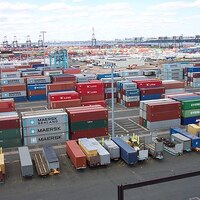
The larger deal is with Mercosur - Argentina, Brazil, Paraguay and Uruguay - which already trades about 110 billion euros ($121 billion) annually with the EU, making Europe their second-largest partner after China and ahead of the U.S.
For comparison, the United States, Europe's largest trading partner, does approximately 851 billion euros ($936 billion) annually. By contrast, the Mercosur relationship is far smaller, but EU officials see significant growth potential.
"These agreements will cement our position as the world's biggest trading bloc," European Commission President Ursula von der Leyen said during Wednesday's announcement.
For now, the bloc's executive arm estimates the new agreement could boost its exports to the region by nearly 40%, or about 49 billion euros ($54 billion) annually, affecting more than 440,000 jobs tied to exports in the region.
By 2040, the deal could boost EU economic output by about 77.6 billion euros ($85 billion) annually. Car exports could see the biggest gains, with the commission estimating potential increases of over 20.7 billion euros ($23 billion) once the deal is fully implemented.
Right now, European car manufacturers pay a crushing 35% tariff to sell vehicles in these South American markets. The deal would eliminate that over 15 years. Similar steep tariffs on machinery and pharmaceuticals would also disappear.
In turn, the Mexico deal updates a partnership that has been in place since 2000. Europe already does about 70 billion euros ($77 billion) worth of business with Mexico each year, but the new agreement would knock down remaining trade barriers and expand access to critical minerals that Europe desperately needs.
But there's a catch - and it's a big one. While the trade portions only need approval from a majority of EU countries plus lawmakers in the European Parliament, several nations are still pushing back hard.
France is leading the opposition, joined by Italy and Poland, over fears that cheap South American beef and chicken could flood the market and undercut European farmers. French President Emmanuel Macron has been especially vocal, warning the deal doesn't adequately protect the environment or agriculture.
But opposition is showing cracks. After Wednesday's announcement from the College of Commissioners, French officials said they would review the proposed safeguards to assess whether they provide adequate protection. Italian media also reported that new measures have persuaded Italy to reconsider its earlier stance.
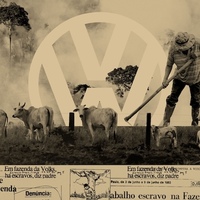
European farming groups are up in arms, saying they can't compete with South American producers who don't face the same environmental and safety rules. Environmental activists are equally angry, with groups like Friends of the Earth calling the Mercosur deal "climate-wrecking" and arguing it could encourage more deforestation in places like the Amazon.
According to the commission's own economic analysis, the deal would have a "negligible" environmental impact, with an estimated increase of global carbon emissions of just 0.0006%.
The EU executive body sought to ease farming concerns by stating South American agricultural imports would make up only 1.5% of EU beef consumption and 1.3% of poultry consumption. To placate France, the commission also pledged a legal proposal spelling out when safeguards would kick in if Mercosur farm goods disrupted EU markets.
The trade deals fit into Europe's broader push to diversify trade partners as ties with China and the United States grow more strained. The Mercosur talks have dragged on for 25 years, starting in 2000 and stalling repeatedly due to false starts and political obstacles, until fresh momentum in 2016 led to a breakthrough in December 2024.
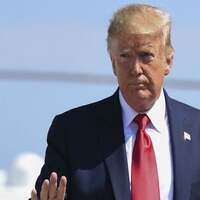
With President Donald Trump back in the White House and threatening new tariffs, European officials are racing to lock in partnerships that took decades to negotiate.
The competitive stakes are clear from the trade numbers. Over the past 25 years, China has overtaken Europe as Mercosur's largest trading partner, leaving European companies sidelined. Today, China leads the trade relationship, Europe ranks second and the U.S. ranks third. European officials say the new pact could reverse that trend, helping Europe reclaim its role as top supplier to the region after years of decline.
There's also a strategic resource angle driving European urgency. South American countries control key materials that Europe needs for its green energy transition and defense capabilities.
Brazil dominates nearly 89% of global niobium processing - essential for high-strength steel and superconducting magnets - while also supplying lithium, graphite and other materials crucial for electric vehicle batteries and solar panels. Argentina is another major lithium supplier.
The Mercosur deal would help Europe reduce dependence on China, which currently dominates many critical material supply chains. The agreement eliminates export taxes and prohibits export monopolies, giving European companies more predictable access to these strategic resources.
The deals follow a familiar pattern: Europe sends high-value goods like cars and machinery, while South America exports raw materials and agricultural products. Critics warn that this reinforces South America's commodity dependence and shifts environmental costs onto the region, as European buyers aren't held to the same environmental standards as domestic producers.
According to Eurostat, approximately 43% of South American exports to Europe consist of agricultural goods, 31% are raw materials and minerals, and 7% are paper products. In return, Europe exports machinery (28%), chemicals and pharmaceuticals (25%) and transport equipment (12%). The new agreement would reshape these flows by removing most tariffs on both sides.
Both agreements also protect hundreds of traditional European foods and drinks - from Champagne to Parmigiano-Reggiano cheese to Scotch whisky - shielding them from knock-offs.
The deals still face hurdles in the European Parliament, where farming concerns have split lawmakers along national rather than party lines. This week, 40 members of the European Parliament opposed the pact in a joint letter, including 14 from the center-right European People's Party, despite its overall support.
Critics have accused the Commission of bypassing democracy by splitting the trade chapters from broader political agreements, allowing them to avoid ratification by all 27 national parliaments. Environmental groups called it "a democratic hijack" and tried to "sneak the EU-Mercosur agreement in through the back door."
The executive defends the procedure as legal and routine. The commission aims to have the Mercosur trade chapters approved by year-end, but passage remains uncertain. If approved, the agreements would mark Europe's biggest trade expansion into Latin America in decades.
Source: Courthouse News Service