

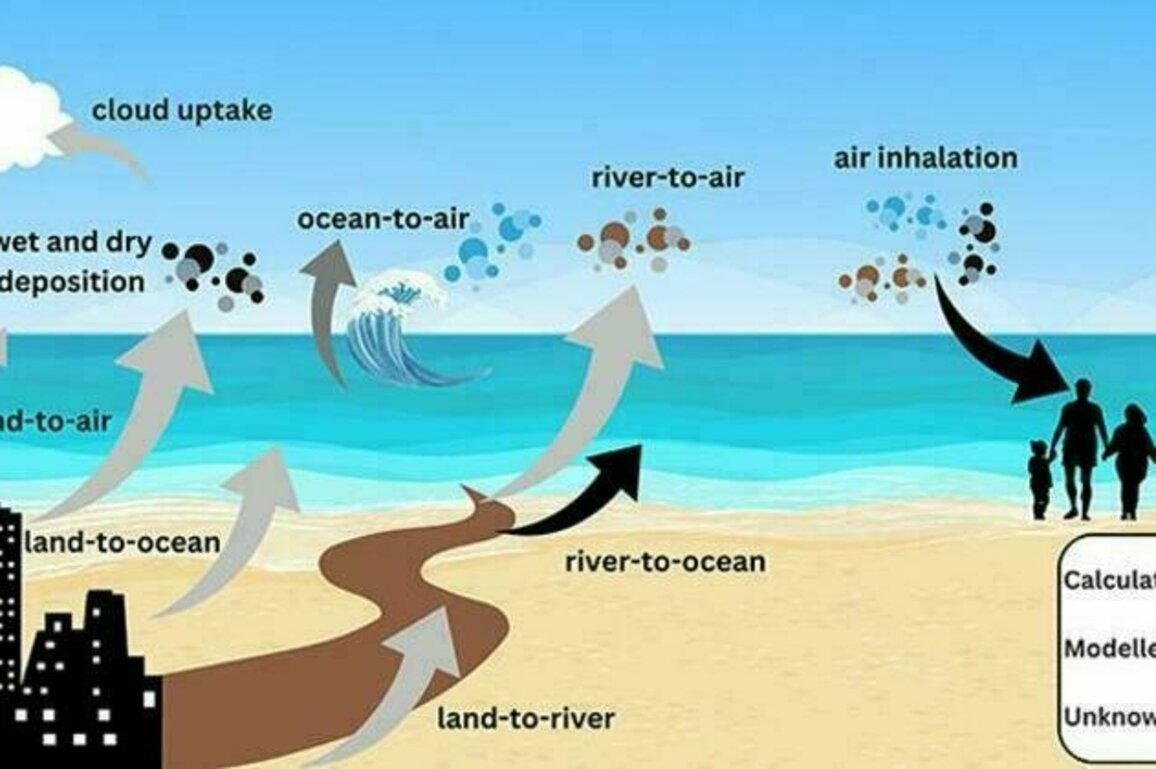
(CN) - Pollution from the Tijuana River has long been seen as a water issue, but a new study shows it's also in the air.
Researchers discovered airborne pollutants - including drug byproducts and industrial chemicals - in high levels near the U.S.-Mexico border.
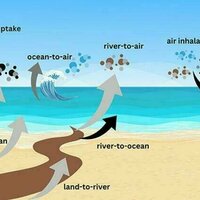
In a study published Wednesday in Science Advances, a team from the University of California, San Diego, analyzed the journey wastewater pollutants take to end up in the atmosphere through coastal aerosols. The results showed that the closer one is to the Tijuana River, the more likely one is to be exposed to its pollutants, including sewage, industrial waste and chemicals.
"Aerosolization of this polluted water exposes billions of people through airborne transmission, reaching far beyond those in direct contact and impacting countless others who inhale contaminated air that can travel for many miles," atmospheric chemistry professor Kimberly Prather said in a statement.
The study focused on the Tijuana River, which flows from Baja California in Mexico up into the United States, where it discharges into the Pacific Ocean. The 120-mile river discharges millions of gallons of wastewater daily and is one of the region's dominant sources of coastal pollution.
The researchers collected samples from the air and water throughout San Diego County. They found a variety of pollutants detectable in both the air and water, including a mixture of illicit drugs, drug metabolites and chemicals from tires and personal care products that become airborne from wastewater.
Lead author and recent doctoral graduate Adam Cooper collected the samples as part of a field study with Prather's lab. Prather has been focusing on measuring the air pollution impact of the Tijuana River for the past several years.
"The global surge of untreated wastewater entering lakes, rivers and oceans poses a growing health threat," Prather said in a statement.
While the samples were taken five years ago, the findings remain relevant because the way in which sewage discharges into the river has not changed significantly. Pollution in the river has been an issue for half a century.
"The Tijuana River region is a very dynamic environment with implications for public health, environmental policy and international relations between the United States and Mexico," Cooper said in a statement. "Ours is one of the most comprehensive studies to date investigating water-to-air transfer of these pollutants."
Fighting sewage with sewage
The researchers used a compound known to come from sewage to figure out where the pollutants originated. Specifically, the team used a stable metabolite of cocaine called benzoylecgonine - a byproduct of cocaine use found in urine.
The UCSD team then observed that the cocaine metabolite levels in the ocean water of Imperial Beach spiked after rainfall, which correlated with increased Tijuana River flows. The cocaine metabolite levels in the air also rose in correlation with higher rates of sea spray aerosol emissions.
Then the researchers compared 11 other pollutants to the cocaine metabolite in aerosols to see which ones behaved in a similar way and may have come from the same wastewater source. What they found was a high correlation between the cocaine metabolite three other pollutants: methamphetamine, a UV filter used in sunscreen called octinoxate and a compound used in tire manufacturing called dibenzylamine.
The researchers then discovered that the pollutants were concentrated in higher levels in Tijuana River water rather than in the ocean. While cocaine was observed, the levels were quite low compared to the other pollutants.
Jonathan Slade, an assistant professor of chemistry and biochemistry who led one of the field study groups, said octinoxate - the compound found in sunscreen - can degrade DNA when exposed to light.
"And if it's in these tiny aerosols we're breathing in, it can get deep into our lungs and pass into our bloodstream," Slade said in a statement. "That's very concerning, especially considering the high levels at which we found it in the air."
The team found that in some coastal conditions, people may inhale octinoxate levels similar to those at wastewater treatment plants.
The researchers urged continued focus on this area of study.
"Often the sewage crisis is considered a water issue - and it is - but we show that it's in the air too. Truthfully, we don't yet know the acute health effects," Slade said. "But the numbers we report can be incorporated into models to help us better understand what we're breathing in and how much we're exposed to."
Slade also noted that other sources of wastewater and pollution runoff should be studied as well, including wastewater treatment outfalls, the San Diego River and the Los Angeles River.
"Aerosolization of this polluted water exposes billions of people through airborne transmission, reaching far beyond those in direct contact and impacting countless others who inhale contaminated air that can travel for many miles," Prather said. "We are continuing our studies in this region to better understand the short and long-term health impacts of inhaling this newly identified source of airborne pollution."
Source: Courthouse News Service